
A new book from a researcher in NIU’s Division of Outreach, Engagement and Regional Development reveals the historical roots of current education and family policies
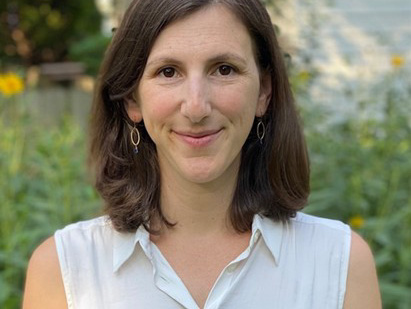
Michelle Bezark, Ph.D. is a senior policy research associate at NIU’s Center for Early Learning Funding Equity (CELFE). She recently published Making Babies Count: The Sheppard-Towner Act and the Building of the Modern Administrative State with Cambridge University Press.
Her book shares the story of the Sheppard-Towner Act of 1921, the first federal policy aimed at improving health outcomes for mothers and infants in the United States.
Bezark, whose research focuses on how public systems and policies impact families with young children, answered questions about the book, which reveals how the first systems built to support families and young children continue to shape policy today.
Here’s an excerpt from her interview in NIU Today. You can read the full article online.
What inspired you to write this book?
This book grew out of my dissertation research at Northwestern University, where I studied U.S. policy history and conducted extensive archival research on the Sheppard-Towner Act. I became fascinated by this moment in the early twentieth century when reformers, policymakers and public health advocates were trying to build entirely new systems to support mothers and babies. The Sheppard-Towner Act was the first federal social welfare policy in the United States, yet very few people today have heard of it.
After completing my doctorate, I moved into contemporary early childhood education and care policy research through my work at NIU’s Center for Early Learning Funding Equity. As I became more involved in researching today’s early childhood systems, I started noticing echoes between current policy conversations and the world I had researched from 100 years earlier. Many of the same debates about public investment, family support systems, governance, and access to services are still with us today.

I also found that colleagues working in early childhood policy spaces were eager to better understand the historical roots of the systems and programs they work with every day. That became a major motivation for the book. I wanted to tell the story not only of how this policy was passed, but how people at the federal, state and local levels worked to build administrative systems from scratch and expand services for families with young children, where none had existed before.
What drew me most to the project was the realization that this history still has a great deal to teach us. Looking back at how these systems were created, what worked, and where they fell short can help us think more clearly about how we better support children and families in the future.
Who is this book for?
I wrote the book to be accessible to anyone interested in history or public policy, from undergraduates to policymakers, historians, economists, advocates, legal scholars and sociologists. While the book engages with scholarship on American political development and the growth of the administrative state, I wanted it to feel approachable to readers outside of those academic spaces as well.
A lot of the traditional literature in this field takes a very top-down view of government and policy. I wanted to tell the story differently by focusing not only on institutions and legislation, but also on the people affected by these systems and the ways personal and systemic forces interacted to create political and cultural change. The book follows policymakers and administrators, but also mothers, families and local communities navigating these programs in their everyday lives.
As I was rewriting, I was also thinking about my colleagues and friends working in contemporary early childhood policy spaces through my work at CELFE. Many of the questions they are grappling with today around governance, funding, data and family support systems have deep historical roots, and I hope this history helps provide context for those ongoing conversations.
Read the full interview with Michelle in NIU Today.
