
NIU’s Center for Early Learning Funding Equity (CELFE) recently shared new findings from the Shortchanged Project, their 50-state analysis of public investment in early care and education.
The newest report, published in December 2025, is titled Early Learning Shortchanged: Creating a Record of Public Investments in Early Care and Education. It uncovers $6.7 billion in state spending not captured in national reports and compares per-capita investments across age groups in each state, offering a clearer record of how public dollars support children before they enter elementary school.
Overall, the report found that in Fiscal Year 2022, for every public dollar spent on the education and care of a school-aged child, only 21 cents were spent on a preschooler, while 11 cents were spent on an infant or toddler.
The report’s authors, Theresa Hawley, Ph.D., Michelle Bezark, Ph.D., and Sara Van Valkenburgh, M.P.P., write, “Effective early care and education cannot be affordable and
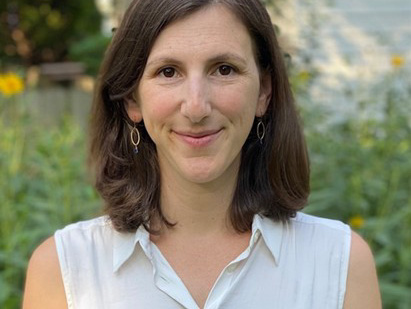
Michelle Bezark
accessible for all families without significant further public investment. Most young families cannot afford the high cost of child care or preschool, especially when the teaching staff are paid competitive wages.”
CELFE’s research and this report are necessary because tracking public funding for early learning in the U.S. is complex. “Unlike K-12 education, where federal and state/local spending is well-documented, early childhood education lacks a single federal reporting system, and few states comprehensively report their spending across funding streams,” the authors note. The report’s comprehensive analysis addresses this gap by tracking spending across multiple funding streams in all 50 states.

Theresa Hawley
Why is investing in early childhood education and care so important?
According to Hawley et al.’s earlier 2024 Shortchanged Report, “Decades of research show that children develop long-lasting social-emotional, gross motor, and learning skills during their first five years of life. As Nobel Prize winning economist James Heckman’s work demonstrates, dollars spent on children in their youngest years are the most cost-effective human capital investment available. Yet those are the very years in the United States when federal, state, and local governments spend the least on children’s education and development.”
Hawley also notes that beyond the child’s individual development, funding early childhood education and care impacts the employment and earning potential of American families.
“Across the country, working families are struggling to afford quality early education and care that meets their family’s needs,” Hawley writes in a recent blog post. “As access gaps widen, more parents – especially mothers – are being pushed to leave or reduce participation in the workforce, with measurable effects on employment and productivity. A 2023 analysis by ReadyNation estimates that insufficient child care costs the U.S. economy up to $122 billion annually in lost earnings, productivity, and tax revenue.”
About CELFE

Sara Van Valkenburgh
The mission of CELFE is to guide and inspire states and communities as they design, transform, and sustain public early education and care systems to be equitable, efficient and effective. Our vision is a system where early childhood education and care is funded and governed as a public good and is a fully realized component of the education continuum throughout the United States.
Read the full report and more from the Shortchanged Project online. Learn more about CELFE at celfe.org.
